Peatlands and People
The connection between peatlands and people is as old as the hills. People have relied on peatlands for thousands of years as a source of fuel, food and water, and this has shaped the landscape we see today.
In the past, the cutting of peat for fuel was of great importance for Manx people, and although this has now stopped we still value peatlands for the many services they provide. They supply our drinking water and food; they support traditional farming; they can reduce downslope flooding and protect against drought and wildfire; they are home to rare and important wildlife; and they provide us with recreation and wellbeing opportunities.
A day in the hills
If you wander over the hills, you may be able to imagine what they were like in times past. Manx history is written in the land, and gathering peat for fuel had a big influence on what we see there today.
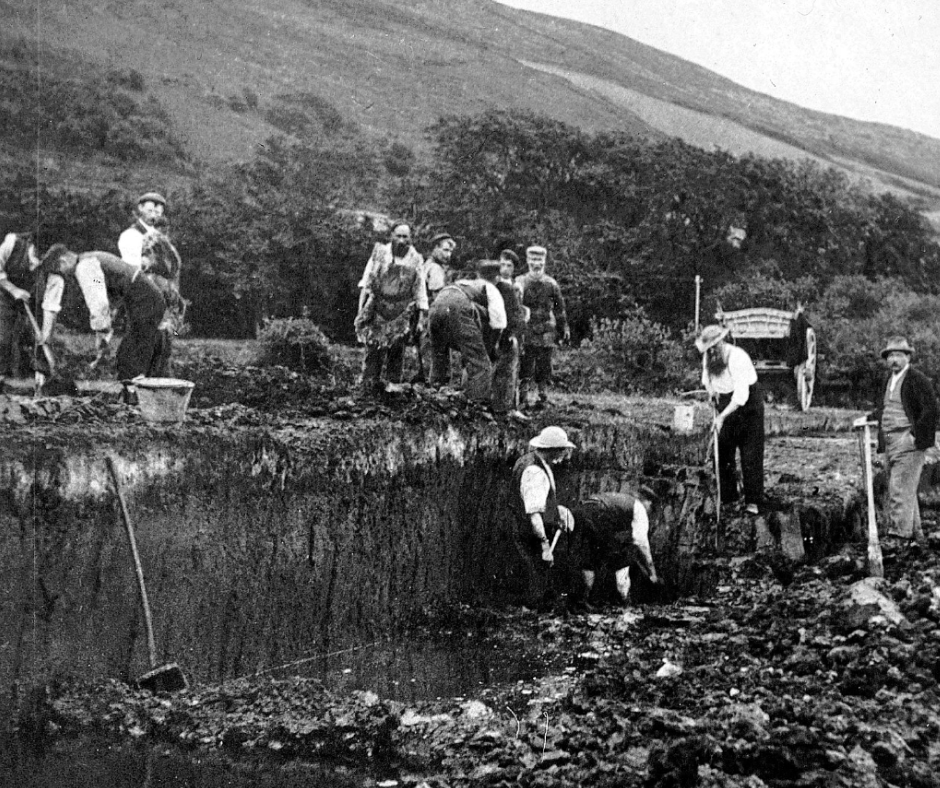
Many Manx people would take to the hills on the first of May, often walking many miles to get there. According to Sarah Christian of Lhergyrhenny, many groups would put in three or four days of work, often walking home each evening. People from further away would start the journey at 4am, as it was important to stake their claim on the best bit of turf. During these days they could gather 20 loads per day, enough to last all winter.
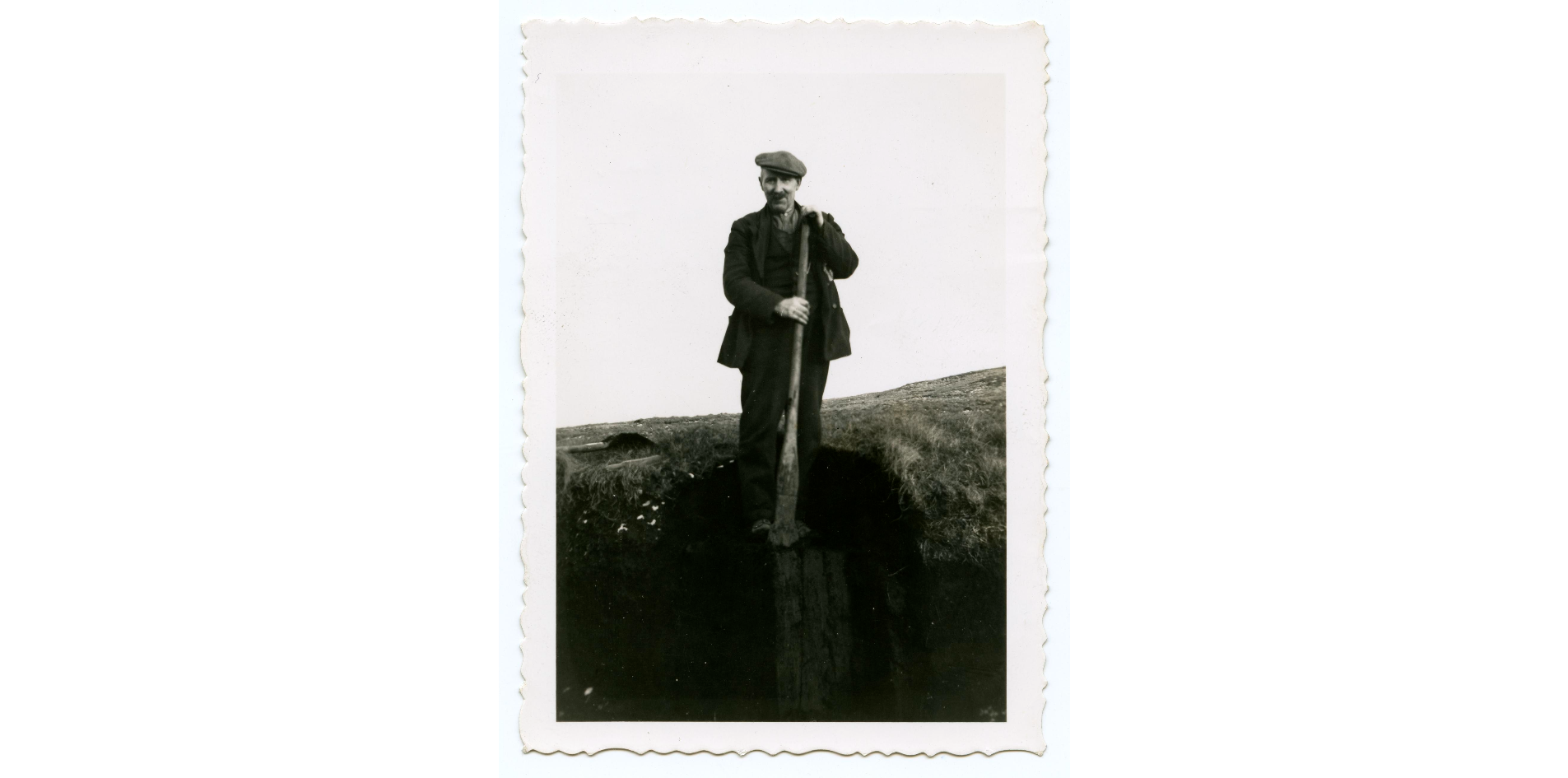
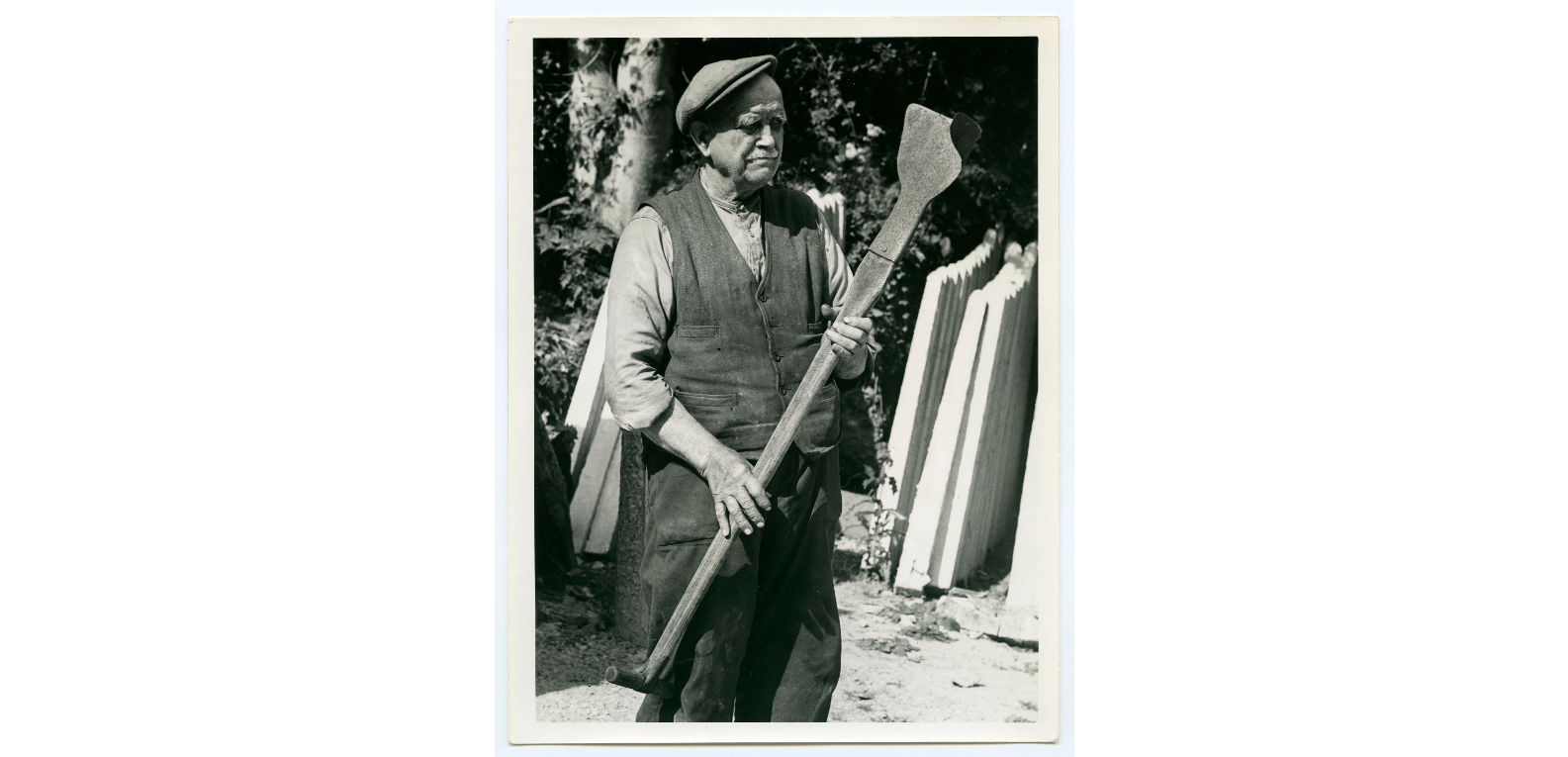
To gather the peat, they would first remove an area of vegetated turf and place it aside ready to be returned after the cutting was finished. The implement used was known as a ‘faayl’, or turf spade. This was used to cut rectangular blocks of peat, which were then laid nearby to dry. Once the top layer had been cut and laid out, the next layer would be started. Often a metre or two depth of peat would be removed by this method.
Despite the hard work, these hill days often had a holiday atmosphere. There was plenty of food, with Sarah Christian recalling meat, soda bread, butter and jam, as well as ‘jough’ or drink. Some people would camp out, sleeping on carts covered with sailcloth, and the sound of song and tall tales would echo around the hills.
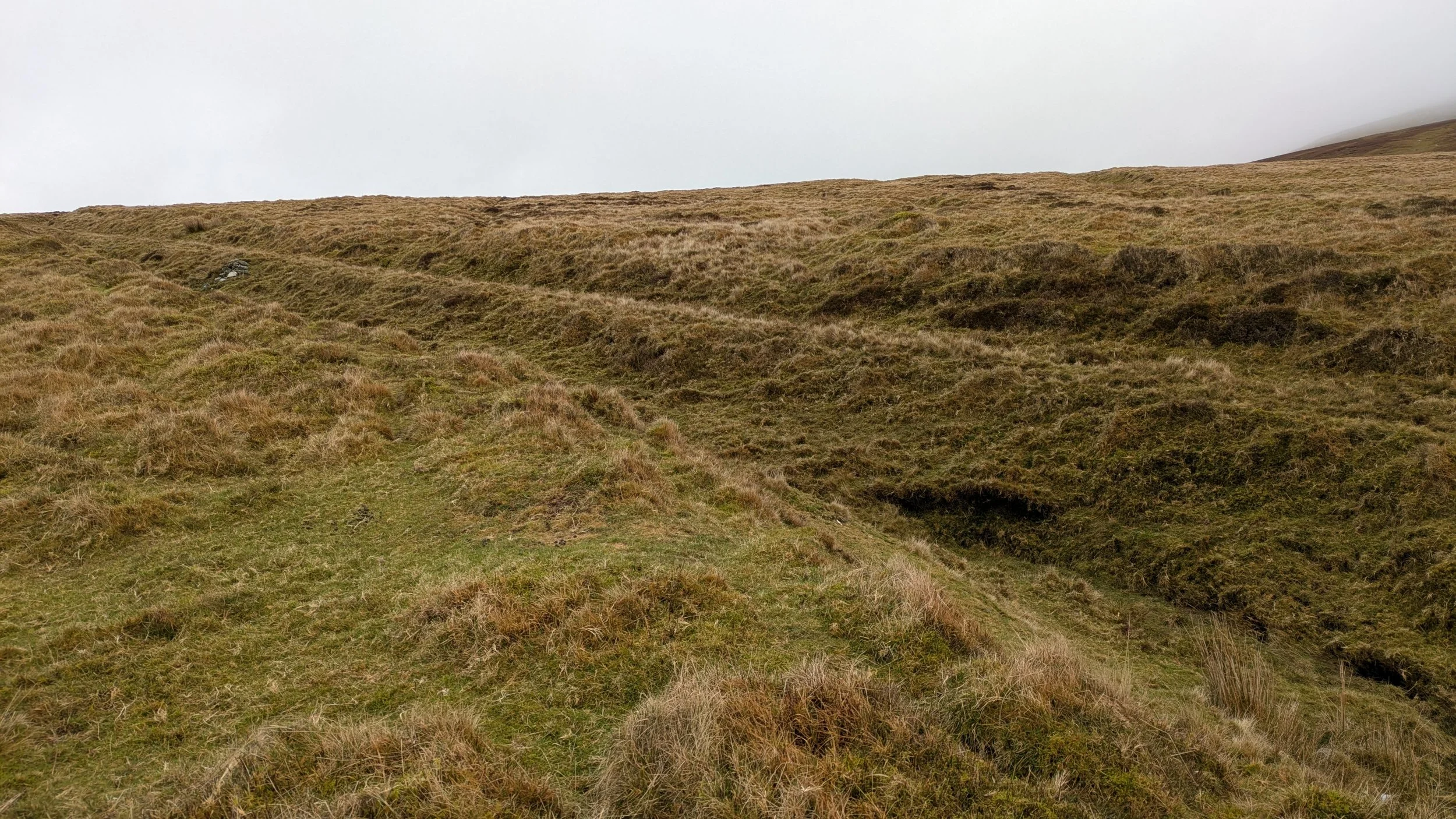
The remnants of these old peat cuttings can still be seen today. Some of them revegetated naturally, perhaps due to the turf being replaced well. Others appear as exposed and eroding peat hags, which we’ve been working hard to reprofile and revegetate. We still have some areas of deep peat on the Island, but it’s amazing to think how much there used to be!
Old hill tracks
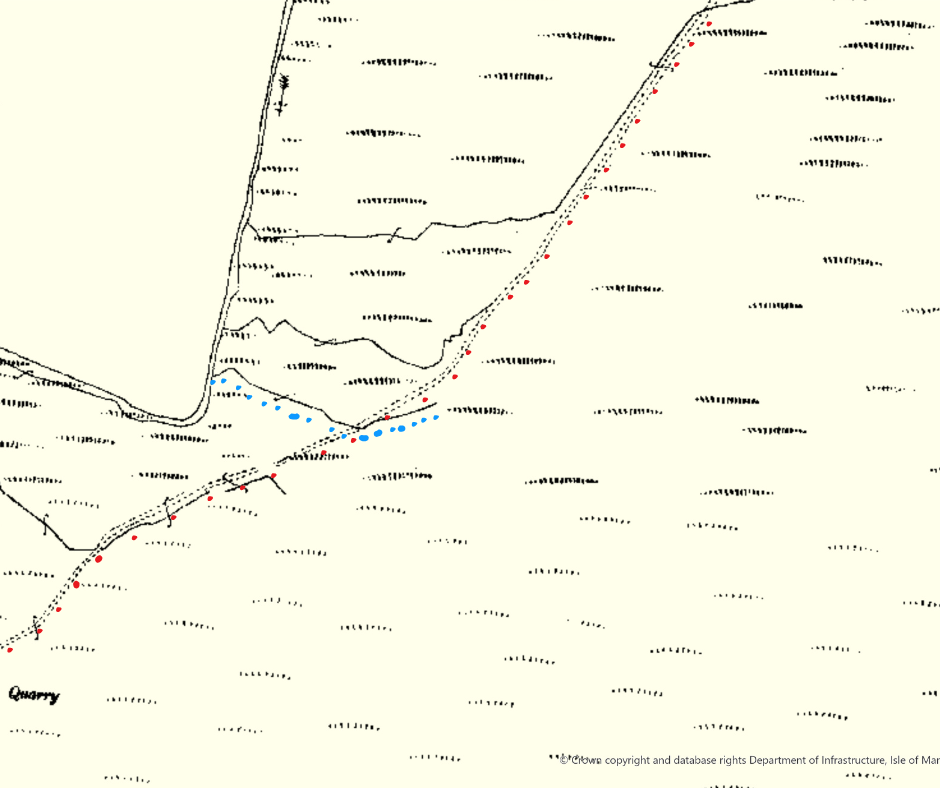
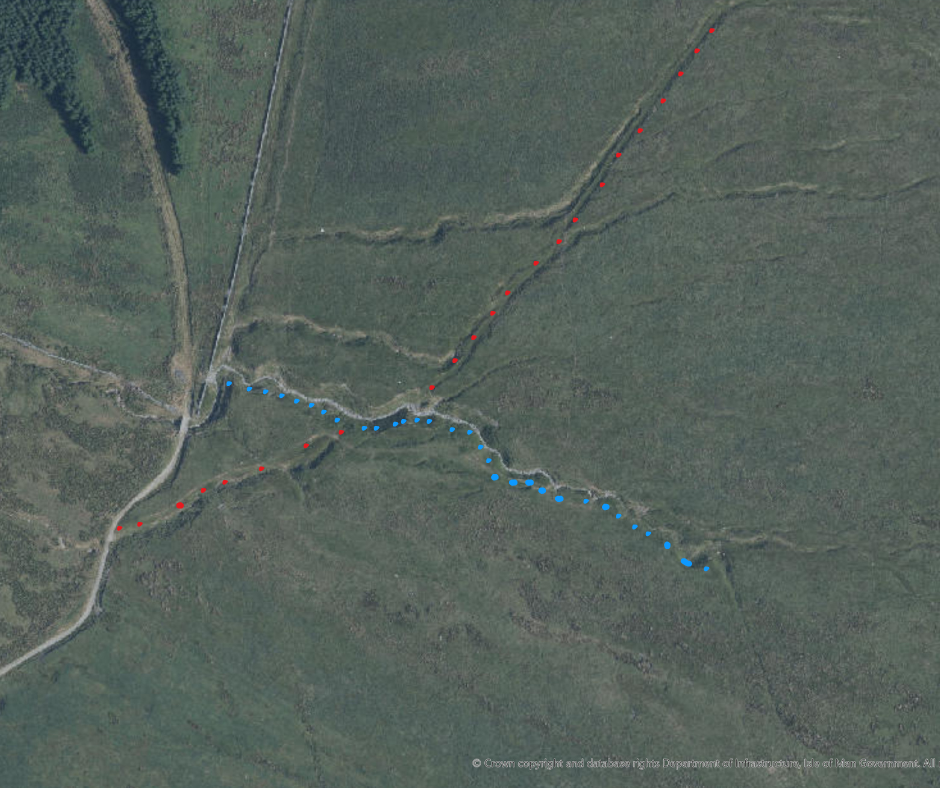
Several roads cut across the hills these days, most notably the A18 mountain road which forms part of the TT course. In the past there were other tracks, many of which are still visible today. These were used to transport people and tools to the hill and to remove the cut peat once it had partially dried. Horses and carts were used where the tracks were a gentle angle and sleod-laue, or hand-sleds, where they were steeper. Ponies with straw panniers, or creels, were also used to take the peat from the hill.
If you’re wandering over the hills see if you can spot any of the old cart tracks and imagine how busy they might once have been, with carts and sleds full of peat.
Peat cutting during World War 2
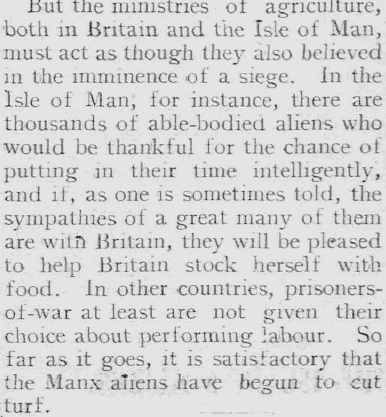
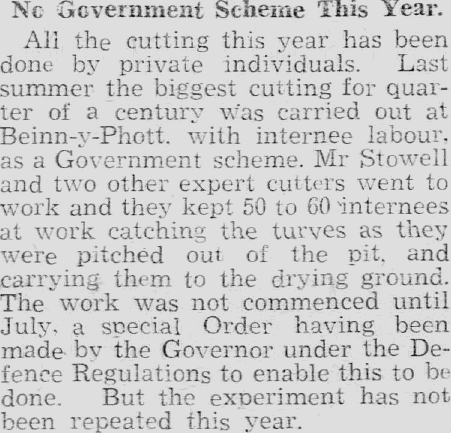
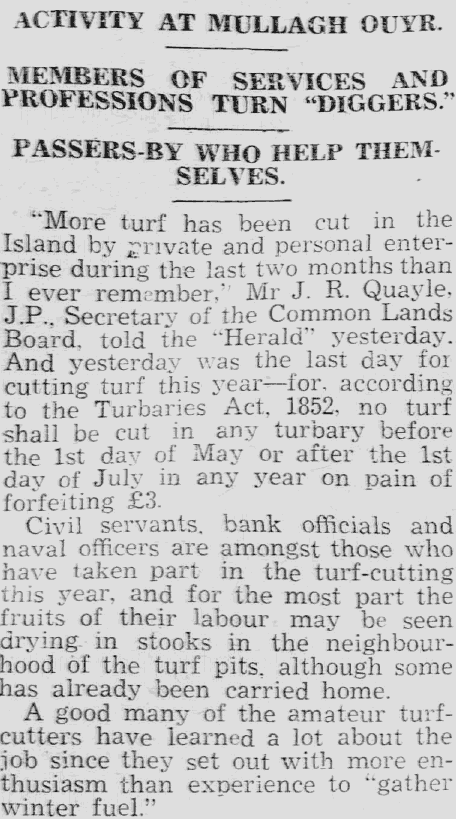
The cutting of turf saw a resurgence during the second world war, with people being encouraged to head to the hills. Often these were people who had little or no experience of this, including ‘civil servants, bank officials and naval officers’. Internees were also taken to the hills during the summer of 1940, with 50 to 60 helping Mr TW Stowell and two other ‘expert cutters’.
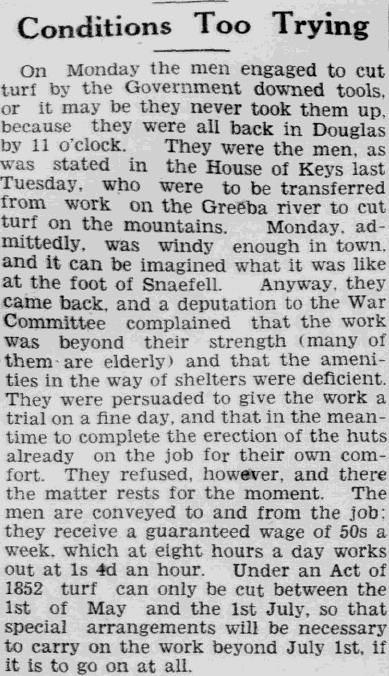
However, the hard work of cutting peat was not for everyone. June 1942 saw a ‘strike’ by those men ‘engaged to cut turf by the Government’. It seems that the work was too demanding and the weather too windy. Despite being given the option to construct temporary shelters for their comfort and to continue the work on a fine day, the men refused to return to the work.
Luckily our peatland workers are much hardier souls, working in most weathers without shelter. And as the work is undertaken between September and March to avoid lambing and ground-nesting birds, the weather is almost always cold, wet, windy, or all three!
The distant past
Peatlands are a great preserver of the past, giving an insight into the plants and animals that once inhabited the Island.
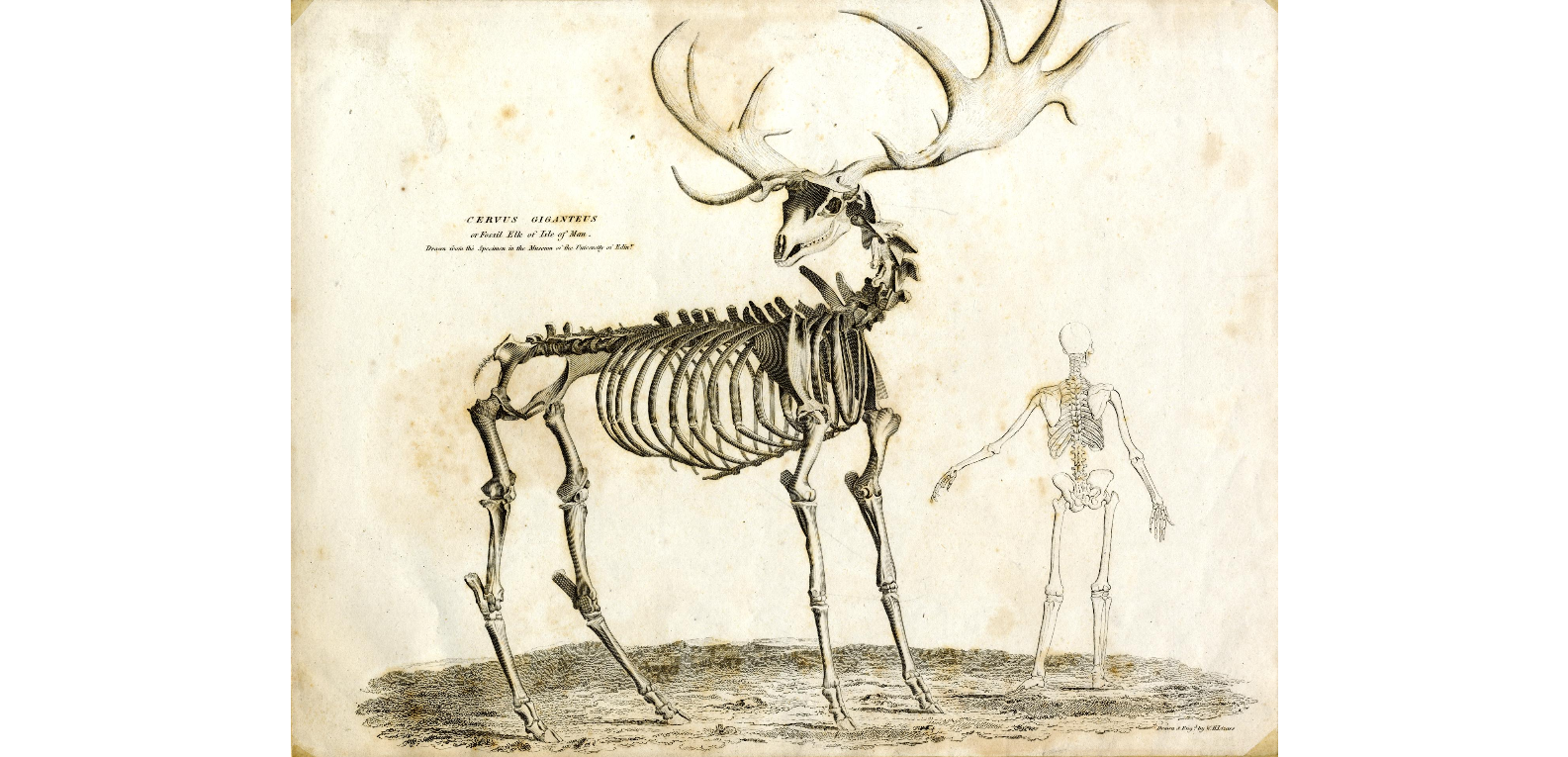
One of the most famous is the Irish elk Megaloceros giganteus, which once roamed the Island. Towards the end of the last glaciation, small lakes known as ‘kettle holes’ were found in many places in the north and west of the Island. These lakes gradually filled in with dead plant material and sediment, and sometimes a carpet of plants would cover the surface. Any unsuspecting animal walking on this would soon find themselves plunged into the water and entangled in the vegetation, unable to escape. Over time, their remains became covered in sediment and overlain with peat. There they remained undisturbed until found by people digging ‘marl’ from these areas. An example from near St Johns can be seen in the Manx Museum.
As well as preserving larger plant and animal remains, peat also holds a record of pollen over about 10,000 years. Peat forms by the accumulation of partially decayed plant material, creating a sequence that can be dated using radiocarbon dating. Pollen from cores of peat can be analysed to show how vegetation has changed over time, providing a valuable insight into past climate change and the impact of humans on the landscape.
Cultural importance
The importance of peatlands in Manx culture is evident in the literature, art and music of the Island. This extract from ‘Mona’s Isle’ by William Kennish (1844), describes how the gathering of peat was an early summer tradition:
Now spring is past, and idle lies the plough,
I’ll turn my thoughts towards the mountain’s brow,
Where many a group of peasants at the dawn
Are seen to move along the upland lawn,
Towards the north of Corna-Chesgia’s side,
Their winter’s stock of fuel to provide
With lab’ring hand from Nature’s ample store
Of turfy mould beneath the grassy moor.
This yearly pic-nic, mix’d with useful toil,
Calls forth the dame the three-legg’d pot to boil
Of good hung beef that graced the chimney-cheek
The winter through amongst the turfy reek;
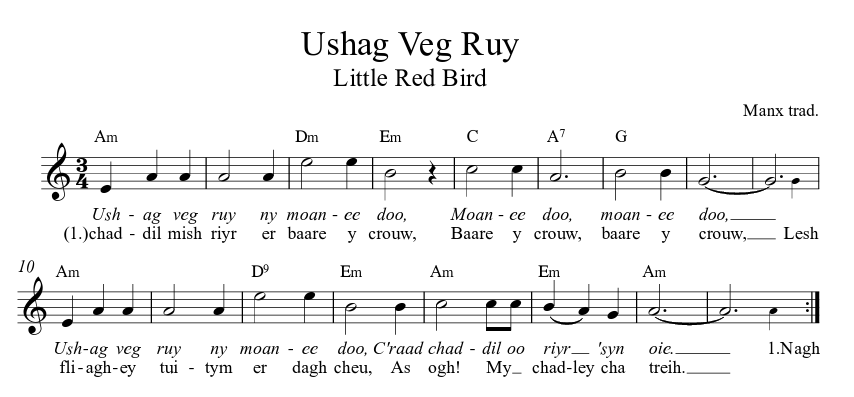
The chorus of this traditional Manx song references a little red bird of the ‘black turf ground’. This bird is thought to be a robin, but this would possibly from the lowland peat in the curraghs as robins are not common in upland peatlands. Or maybe it’s a red grouse from the upland areas? Or maybe it’s a metaphor?
Listen to the song below.
Ushag Veg Ruy
Ushag veg ruy ny moanee doo,
Ny moanee doo, ny moanee doo,
Ushag veg ruy ny moanee doo,
C'raad chaddil oo riyr 'syn oie?
Little Red Bird
Little red bird of the black turf ground,
Of the black turf ground, of the black turf ground,
Little red bird of the black turf ground,
Where did you sleep last night?
Songs and photos from Culture Vannin and Manx National Heritage