Time for a yarn?
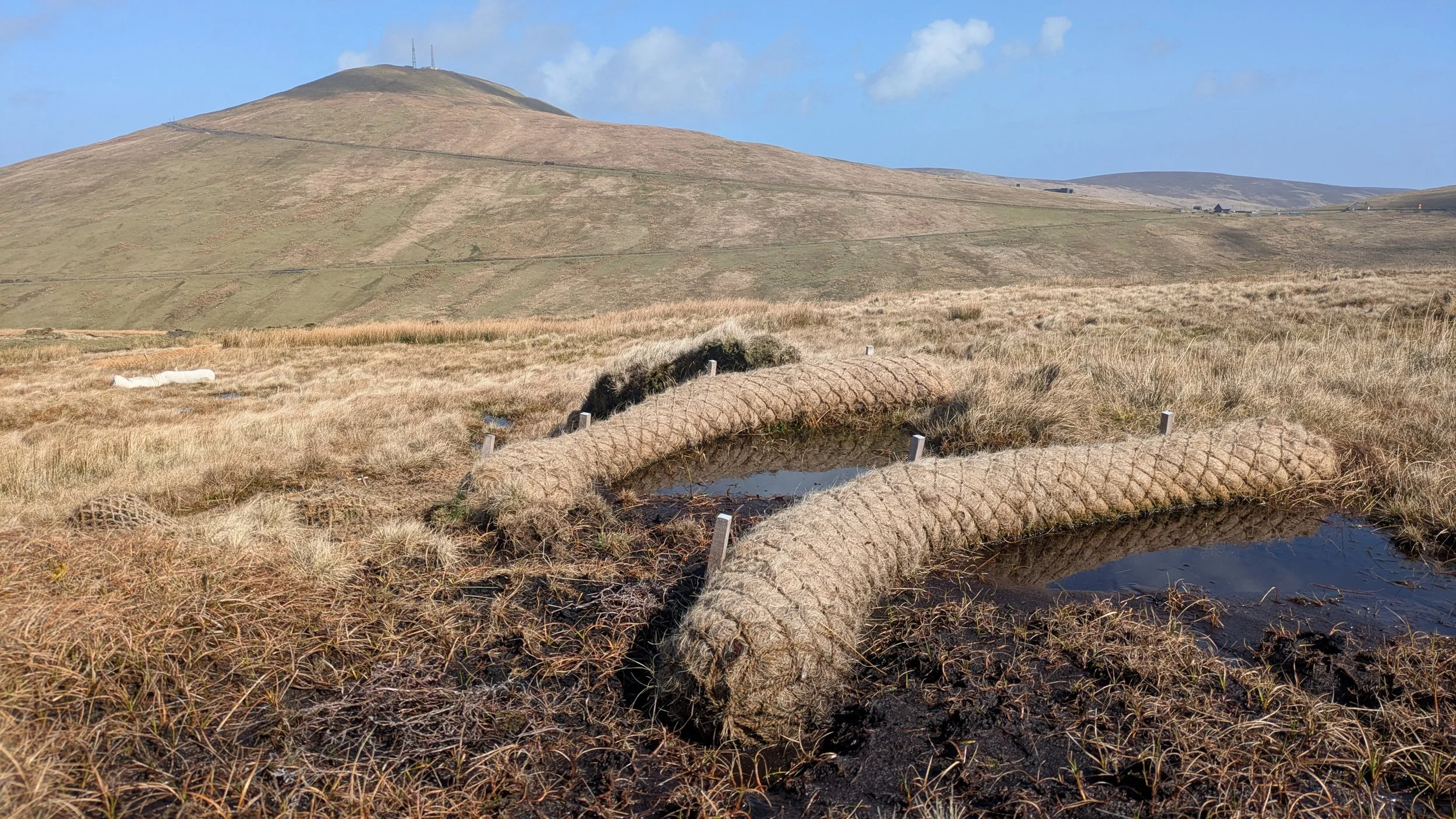
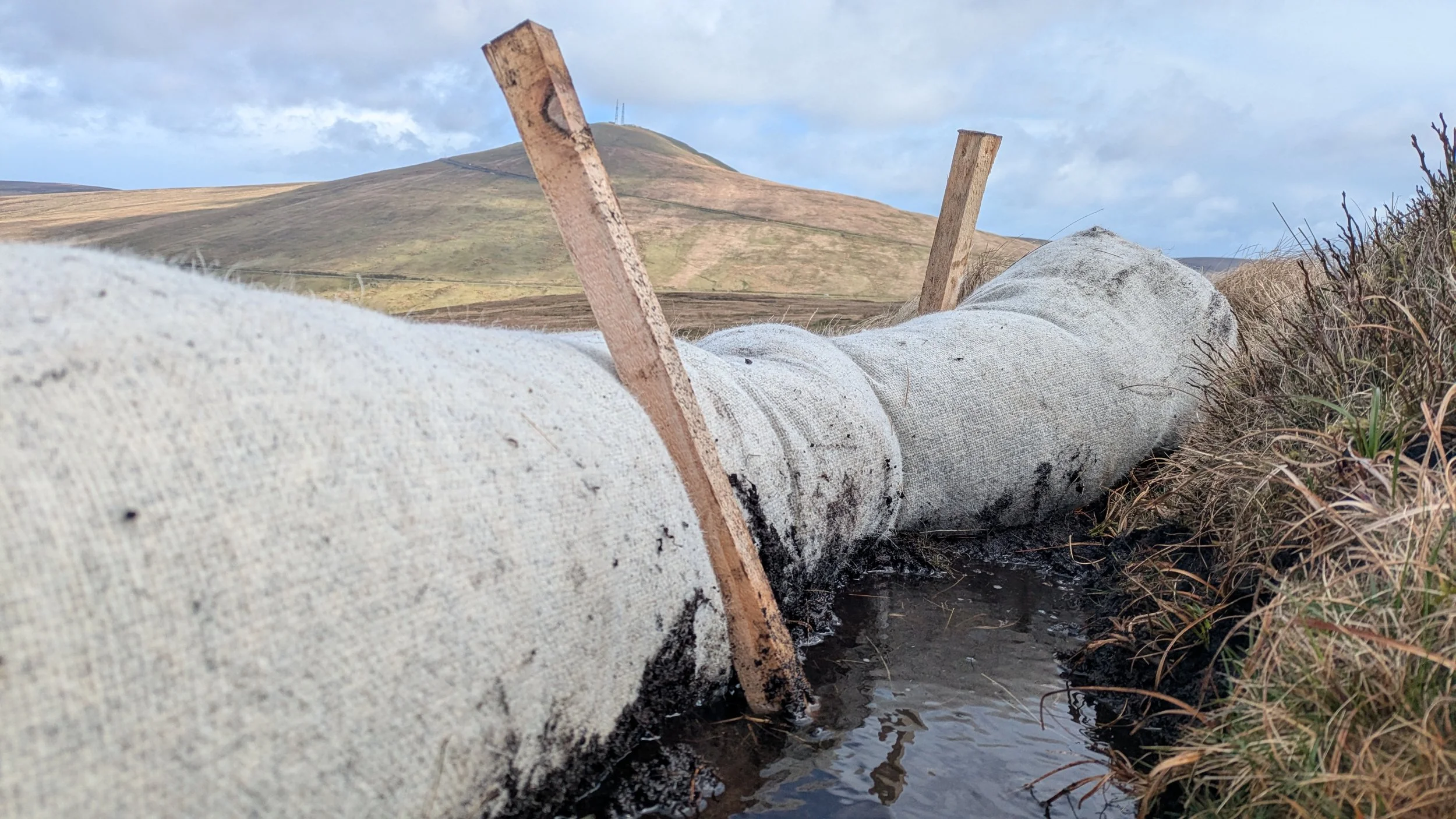
Could local wool be returned to the hills to help with peatland restoration? That’s what we’re hoping to find out by trialling wool logs on our restoration sites.
Restoration work often involves the use of geotextiles to help manage water flow and to stabilise areas of bare peat. Currently, products made of coir material, which is a by-product of coconuts, are the most commonly used both here and in the UK. They are fully biodegradable after a few years and work well to slow the flow of water, trap sediment and encourage plant growth. We also use locally-sourced heather bales, where appropriate.
Recently there have been calls for a move towards replacing coir with sheep wool in order to work towards a more circular economy, with local wool returning to the hills on which it grew. Trials of wool products are on-going in the UK, testing products to see how well they compare to coir and whether they are safe to use in sensitive peatland habitats.
It may appear obvious that wool should be used in the hills, but there are many things to consider before it is used at scale. Firstly, does it do a similar job to coir? Does it last as long, does it trap sediment, does it slow the flow of water, does it allow vegetation to establish? These are important questions, as we need to know that the product works!
Secondly, are there any environmental concerns? Does it input too much nitrogen into a sensitive low-nutrient habitat, is there a risk of chemical residues entering our rivers and reservoirs?
We have been interested in trying wool products for land management on the Island for a while, and one of the local farmers suggested a UK company that we could purchase a small number of wool logs from. We have been asked by some people why we didn’t use local wool for the trial, and there is a good reason! UK trials have shown that, in order to increase the longevity of the product and reduce the chance of chemical residues entering the environment, raw fleeces should be scoured before being used. Scouring would need to be done in the UK, and the scouring plant will only process single source batches if they exceed 1,000kg. As we would not be able to utilise this amount of wool in a trial, it would not be cost-effective for local farmers to invest in this process at this stage.
If the trials are successful we will work with DEFA upland grazing tenants and the Isle of Man Flockmasters Association, who are part of the Manx Peat Partnership, to use products made of local wool in the future.